Lets talk about Bridal Sizing
(Because It’s Not You)
You start wedding dress shopping excited.
And then someone hands you a gown that doesn’t zip.
You hear a number that feels unfamiliar.
Bigger than you expected.
Heavier than it should feel.
And suddenly what was supposed to be joyful feels… personal.
Many brides search phrases like why do wedding dress sizes run small, bridal size chart explained, or why is my wedding dress size bigger than my normal size. The confusion around bridal sizing is common and completely understandable.
And it has nothing to do with your body.
Here’s the simple truth:
Bridal sizing typically runs 2–4 sizes smaller than everyday clothing.
A bride who wears:
Size 8 in streetwear may measure 12 in bridal
Size 12 may measure 16
Size 16 may measure 20–22
Size 20 may measure 24–26
Why?
Why Do Wedding Dress Sizes Run Smaller?
Because many bridal designers still rely on traditional size charts that haven’t meaningfully changed in decades.
While modern fashion brands have gradually adjusted their sizing to reflect evolving bodies and market realities, bridal largely hasn’t.
Historically, high-fashion sizing was developed around a very narrow range of body types. For much of the fashion industry’s history, garments were produced only within a small size range, and anyone outside of that range was expected to have clothing custom made.
In other words, the system wasn’t built to include everyone from the start.
Over time, everyday fashion adapted. Bridal, however, has been slower to evolve which is why so many brides today still encounter size charts that feel disconnected from the way they shop for clothing in the rest of their lives.
And the reason is more complex than people realize.
Bridal gowns don’t operate like fast fashion.
A contemporary clothing brand can shift its size chart from one season to the next. If they adjust grading or proportions, older collections are phased out quickly. Within a year, the new standard becomes the norm.
Bridal doesn’t work that way.
Wedding gowns have a much longer shelf life. A silhouette introduced five or even eight years ago may still be in production. A best-selling style can live on for a decade.
If a designer were to meaningfully change their size chart today, they would face a complicated reality:
• New collections would follow a new grading structure.
• Older core styles would still exist in the original chart.
• Boutiques would carry samples built from two different sizing systems.
• Brides would experience inconsistent fit from one gown to another within the same brand.
Regrading an entire archive of styles is expensive, time-consuming, and logistically complex. Patterns must be redrafted. Production specs must be rebuilt. Factories must recalibrate.
It’s not a small adjustment.
So many brands don’t.
Instead, they maintain legacy size charts created decades ago charts built around narrow body standards that excluded many women from the very beginning.
Bodies didn’t suddenly become more diverse. They always were. The industry simply wasn’t designed to reflect that reality.
The result?
A bride who wears a size 16 in contemporary fashion may be labeled a 20 or 22 in bridal.
Not because her body changed but because the chart never did.
This isn’t about vanity sizing.
It’s about evolution, and the bridal industry has historically moved slowly.
But sizing charts are only part of the story.
Many wedding dresses are still designed starting from smaller sample patterns and then graded upward. Simply scaling a pattern larger doesn’t always account for the way real bodies change across sizes particularly through the bust, waist, hips, and support structure that curvier brides need.
In other words, true inclusivity requires more than just offering a bigger size on paper.
It requires intentional design, thoughtful sampling, and retailers willing to invest in the sizes brides actually wear today.
And that’s where the difference begins.
The Sample Size Reality Most Brides Don’t Know
Here’s where things get more complicated.
Most bridal boutiques purchase only one sample per gown and those samples are often ordered in sizes 8–12.
That means:
Mid-size brides (14–18) are clipped into gowns too small to represent their shape.
Plus-size brides are often unable to try on many styles at all.
Some brides are told they can order a gown in their size without ever seeing it properly on their body.
That’s not a body issue. That’s an inventory decision.
Why This Feels Different for Mid-Size Brides
If you typically shop in “regular” retail stores and have never had to think about extended sizing, bridal shopping can feel like an identity shift.
You may never have identified as plus-size.
You may have always found options in-store.
And suddenly bridal makes it feel like you’re outside the standard range. It’s disorienting.
If that resonates, you may want to read more about the mid-size bridal experience and why it feels so unexpected.
Why This Feels Familiar for Plus-Size Brides
If you’ve spent years ordering clothes online because brick-and-mortar stores didn’t carry your size, bridal shopping can feel frustratingly familiar.
Being told:
“We can order it for you, you just can’t try it on.”
It’s exhausting, especially when this is your wedding dress. Your gown shouldn’t feel like another compromise.
If that sounds like your experience, there’s a deeper conversation around plus-size wedding dress shopping that deserves its own space.
Bridal Sizing Is About Measurements Not Worth
When you order a wedding dress, your measurements are compared to the designer’s size chart. Based on those measurements, the closest corresponding size is selected usually determined by the largest measurement (bust, waist, or hips), depending on the gown’s silhouette and structure.
From there, the dress is altered to fit you precisely.
This process is different from everyday clothing. Many modern fashion brands use stretch fabrics or allow for a bit of fit flexibility, but most wedding dresses are designed to fit closely to the body and are made from structured fabrics with little to no stretch, especially through the bust and waist.
Because of that structure, bridal sizing needs to follow measurements more precisely so the gown can be tailored beautifully to your body during alterations.
The number inside the dress is simply the closest match to your measurements on that designer’s chart.
It is not:
A judgment
A reflection of your value
A category you have to emotionally accept
It’s math. And math has no moral meaning.
Not Sure Which Category You Fall Into?
Bridal sizing impacts every bride differently.
If you’re a size 14–18 and suddenly feel like wedding dress shopping shifted your identity, you may relate to our article on The Mid-Size Bride’s Bridal Wake-Up Call.
If you’ve spent years ordering clothes online because stores didn’t carry your size, you may see yourself in
The Plus-Size Bride Who’s Tired of Imagining It.
A Different Experience for Mid-Size and Plus-Size Brides in Toronto
At More 2 Love Bridal, we created a space exclusively for mid-size, curvy, and plus-size brides.
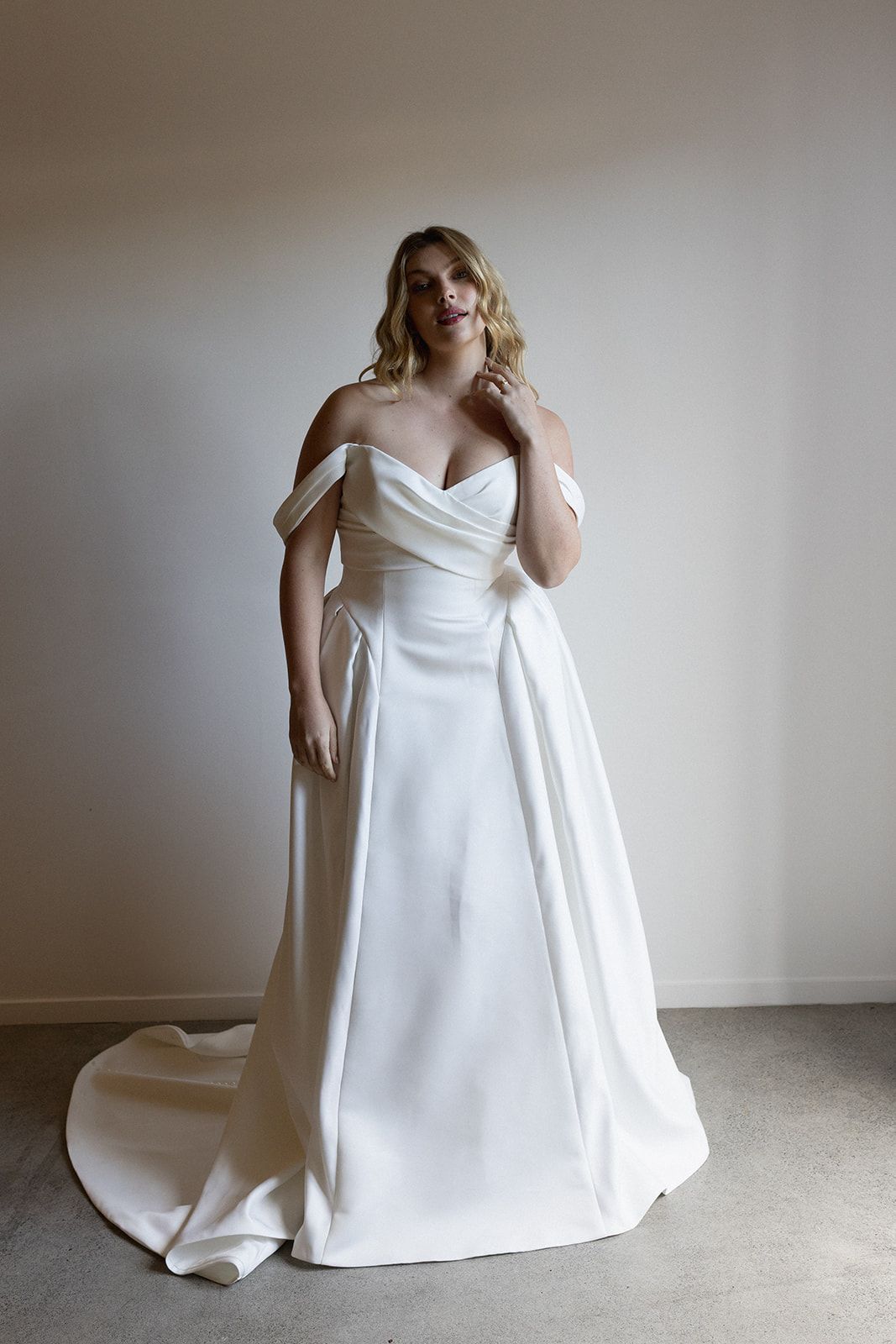
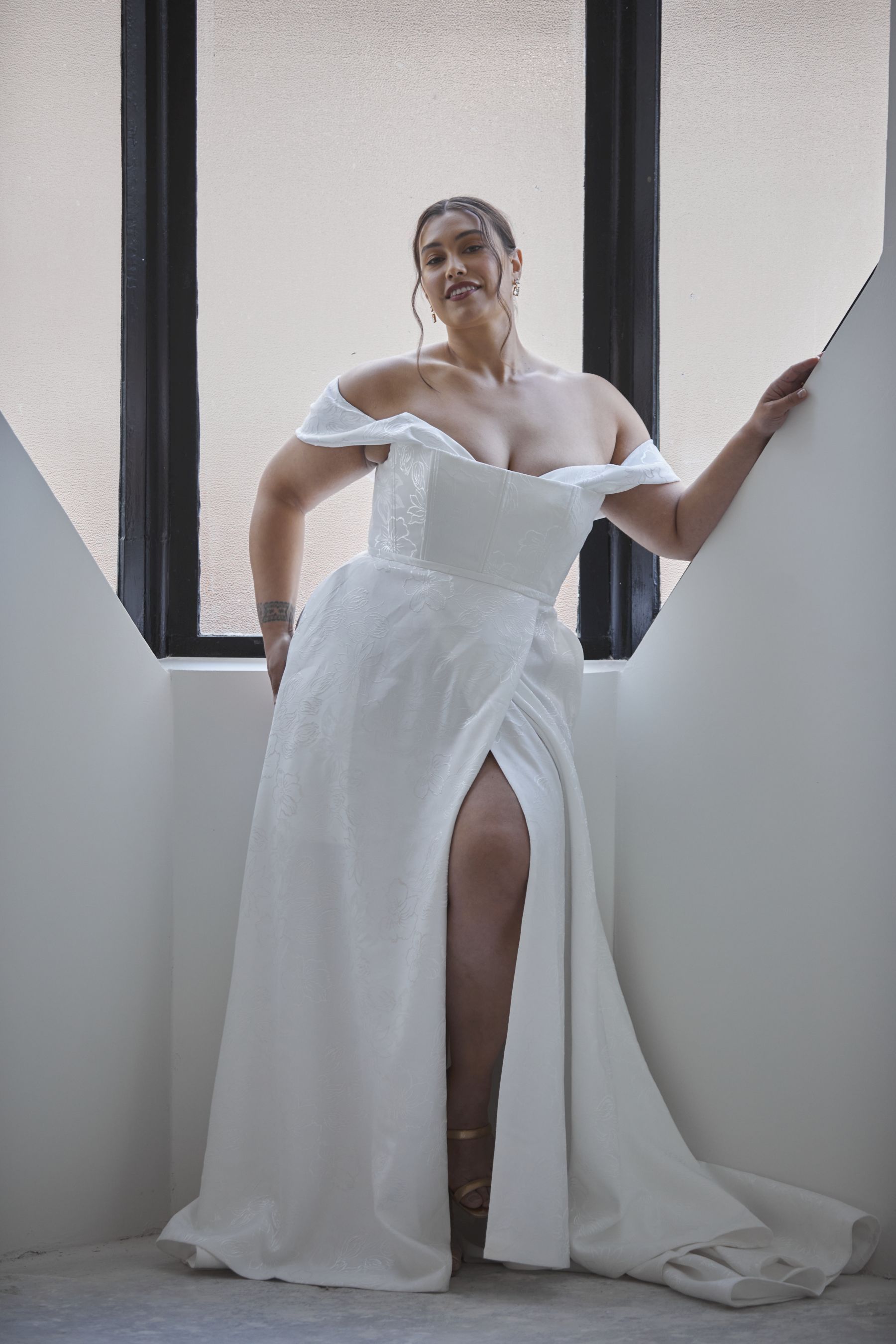
We carry wedding dresses in-store from bridal sizes 16–36+ so you can actually try on gowns designed for your body.
No excessive clipping.
No imagining.
No being told to order blindly.
Just structure built for curves.
Proper support.
And a luxury bridal appointment that feels celebratory from start to finish.
If you’re shopping for wedding dresses in Toronto and struggling to understand bridal sizing, especially as a mid-size or plus-size bride, you’re not alone.
And you’re not the problem.
cheers!
Want more?
check out the latest: